The Ultimate Gear Guide
A skateboard is a precisely tuned machine composed of maple, aluminum, urethane, and steel. Understanding how these components interact is critical to optimizing your ride for street, park, or transition skating.
The Deck: Shape and Concave
The standard modern skateboard deck features a "popsicle" shape, characterized by an upturned nose and tail that mirror each other, facilitating switch (backwards) skating. Decks are measured primarily by width, generally ranging from 7.5 inches to over 9.0 inches. Narrow boards (7.5" - 8.0") are highly responsive and rotate quickly, making them preferred by technical street skaters who execute rapid flip tricks. Wider boards (8.25" and above) offer greater surface area, providing stability at high speeds and a larger landing platform, which is ideal for vert, bowls, and larger gaps.
Concave refers to the curve across the width of the deck. A steeper (high) concave locks the feet in securely and increases structural rigidity, aiding in fast flips. A mellow (low) concave feels flatter and more predictable, offering comfort for cruising and foundational tricks. Most industry-standard decks are constructed from seven plies of North American maple pressed together with strong adhesive for durability and sustained "pop."
Trucks: Height and Width Alignment
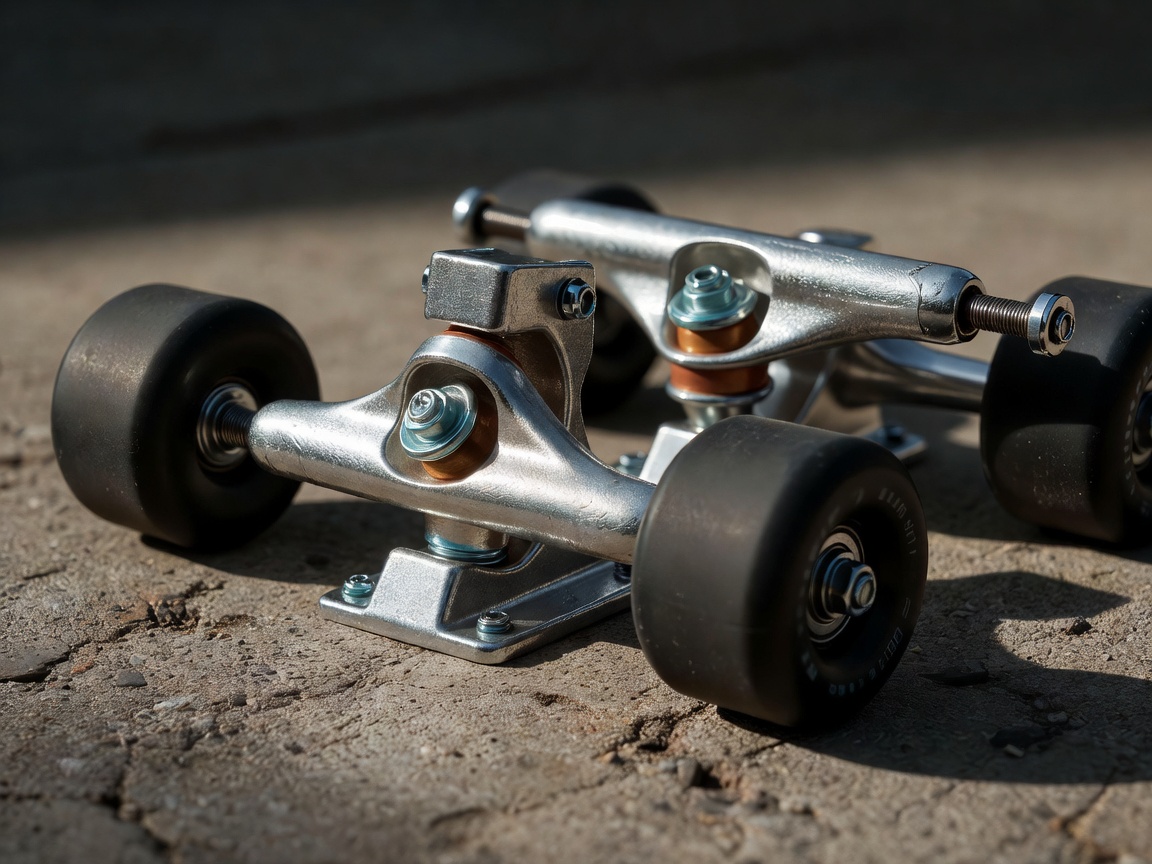
Trucks are the metal, T-shaped axles that mount the wheels to the deck and dictate the board's turning geometry. Truck widths must correspond precisely with your deck width. If the axles protrude past the deck edges, the board will feel sluggish; if they are too narrow, the setup becomes unstable. Manufacturers size their trucks differently, but a general rule is that the axle width should sit exactly flush with the deck width.
Truck height—available in low, mid, or high configurations—impacts wheel clearance and pop mechanics. Low trucks sit closer to the ground, offering excellent stability for technical flip tricks, but restrict you to smaller wheels (under 52mm) to prevent wheelbite (where the wheel scrapes the underside of the deck during sharp turns, causing an abrupt halt). High trucks provide deeper turning clearance and allow for larger wheels, essential for transition skating and rough terrain.
Wheels: Size and Durometer
Skateboard wheels are cast from polyurethane. Their performance is governed by two metrics: size (diameter) and hardness (durometer). Sizes vary drastically depending on the application. Street skaters typically select 50mm to 53mm wheels; they accelerate quickly and reduce the board's overall weight. Transition and bowl skaters favor 54mm to 60mm wheels, which hold speed longer and effortlessly roll over minor imperfections in concrete.
Durometer measures hardness, usually on the "A-scale." Wheels rated 99A to 101A are very hard, offering the necessary "slide" required for grinds and powerslides on smooth skatepark surfaces. Wheels rated below 90A (often termed "cruiser wheels") are softer. They absorb vibrations from rough asphalt and grip aggressively, though they are difficult to break traction for technical ledge skating.
Bearings and Hardware
Each wheel houses two bearings, pressed onto the truck axle. The ABEC rating system (often ABEC 3, 5, 7, or 9) indicates the manufacturing tolerance of the steel balls inside. While higher ABEC ratings signify tighter tolerances, many premier skateboard bearing manufacturers ignore the ABEC scale entirely, focusing instead on impact resistance, as skateboards endure severe lateral forces that traditional industrial bearings do not.
Hardware refers to the nuts and bolts securing the trucks to the deck. Standard length is 7/8 inch for setups without riser pads. If you employ riser pads to avoid wheelbite with large wheels, 1-inch or 1.25-inch hardware is necessary. Griptape, applied to the top of the deck, provides the friction necessary to drag the board into the air during an ollie.