Navigating Skate Parks
A skatepark can initially appear chaotic—a tangle of concrete arcs, steel rails, and fast-moving riders crossing paths. Understanding the architecture and unwritten flow of a park is vital for both progression and safety.
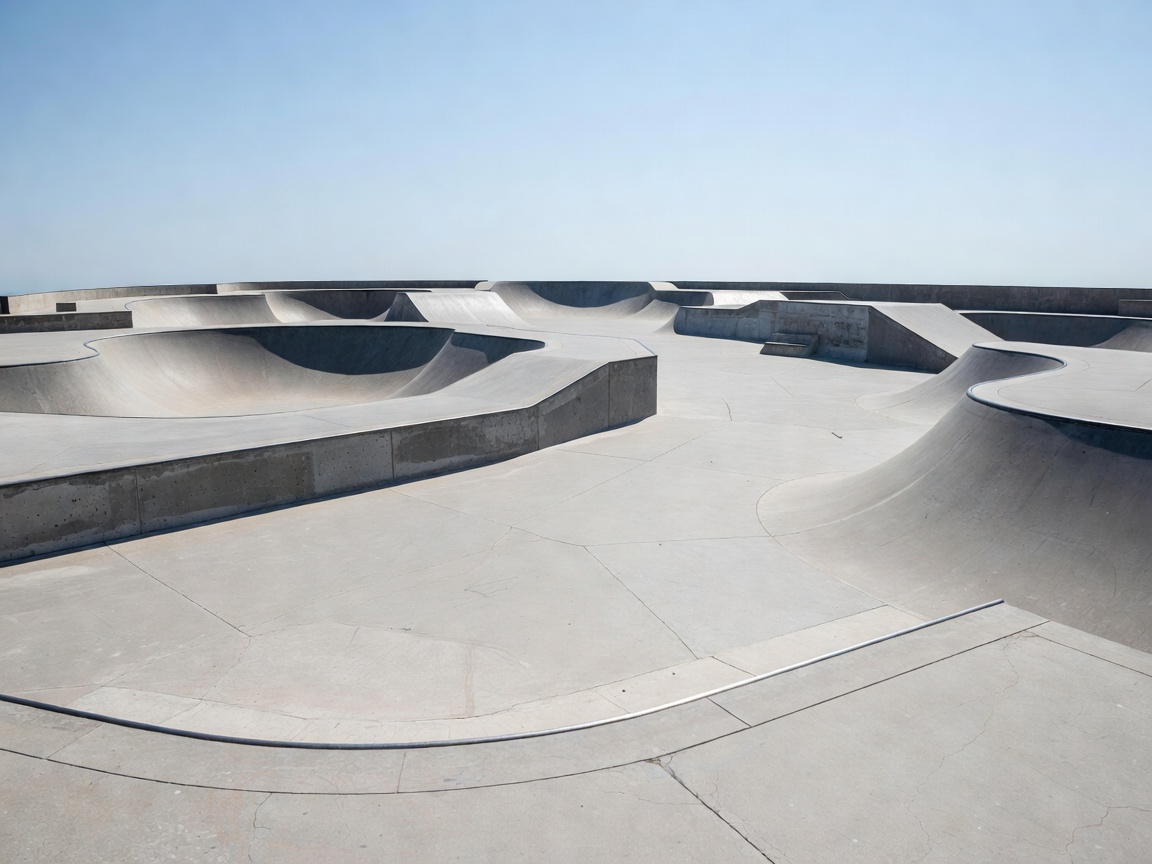
Street vs. Transition Architecture
Modern skateparks are generally divided into two distinct architectural disciplines: street and transition. Street courses replicate urban architecture. They feature flat ground, stair sets, handrails, ledges (hubbas), and manual pads. These elements simulate the raw urban environment where street skating evolved. Skating a street section requires significant pop, precision, and technical ability to grind ledges and clear stairs.
Transition areas, conversely, are built around curved surfaces. This includes quarterpipes, halfpipes, full pipes, and sprawling bowls that trace their lineage back to the empty backyard swimming pools of California. Transition skating focuses on maintaining momentum, carving lines, and executing lip tricks on the metal coping that outlines the rim of the bowl. Riding transition requires less aggressive popping but immense balance, spatial awareness, and a deep understanding of centrifugal force.
Common Park Features
To communicate effectively within a park, you must know the terminology of its obstacles. A Quarterpipe is a curved ramp that transitions from flat ground to a vertical or near-vertical lip. A Funbox is a centrally located plateau, often flanked by banks or stairs, allowing skaters to launch up one side and land on another. A Hubba refers to a ledge descending a flight of stairs, named after a famous ledge spot in San Francisco. A Euro Gap is a stepped bank where the skater must ollie up and over a horizontal gap to reach the higher landing bank.
The Unwritten Rules of Park Etiquette
Skateparks do not have traffic lights or lanes; they operate on a communal understanding of flow and respect. The most severe violation of park etiquette is "snaking." Snaking occurs when a skater drops into a bowl or approaches an obstacle out of turn, cutting off another rider who was already setting up for their run. To avoid this, observe the rhythm of the park. When a skater finishes their line or falls, the next person goes. Eye contact and subtle nods establish this rotation.
Furthermore, never sit or loiter on ledges, stairs, or the coping of a ramp. These are active obstacles, not spectator seating. If your board shoots away from you and rolls across the park, shout "Board!" to warn others. Likewise, if someone else's board is rolling toward a fast-moving skater, step out and stop it. Maintaining the safety of the collective space is a shared responsibility.
Finally, observe the lines. Skaters frequently string multiple tricks together across the park. Before you begin your run, take a moment to watch the lines experienced locals are carving. Ensure your planned trajectory does not intersect blindly with the high-traffic zones of the park.